

Connecticut’s certified organic farmers work hard to grow food with integrity — and customers want to understand what makes your operation (and your products) different. On March 2, the Connecticut Department of Agriculture’s CT Grown Academy will host a focused session on Marketing & Branding Support for Certified Organic Producers, designed to help you strengthen how you show up online and in-market.
CT Grown Academy is a free educational series designed to help Connecticut farmers and agricultural producers improve their marketing and digital presence, helping them to connect more effectively with consumers. This webinar continues that mission with practical, organic-specific guidance you can apply right away.
Spring is a critical season for Connecticut farms. It’s when customers begin planning where they will shop, visit, and buy local for the months ahead. How you promote your farm right now can shape your entire season.
To support farmers statewide, CT Grown Organic is hosting a live, free webinar through CT Grown Academy focused on practical ways to promote your farm for spring.
Live Webinar Details
Date: March 2
Time: 1:00 PM
Who should attend: Connecticut farmers of all types and sizes
This session will focus on simple, effective marketing strategies to help farmers prepare for the spring season.
The webinar will also feature AliRose Grabarz, Agricultural Marketing & Inspection Representative 2, who will speak about opportunities available to CT Grown Organic farmers through the State of Connecticut, including programs and resources designed to support farm visibility and growth.
Whether you sell through a farm stand, CSA, farmers markets, wholesale accounts, or agritourism experiences, this webinar is designed to provide practical takeaways you can use right away.
The webinar will be hosted live and will include time for questions and discussion.
Register to attend:
https://zoom.us/meeting/register/deJZ8o4jQgGvpwpLwxUrpA#/
CT Grown Academy is committed to supporting Connecticut farmers through education, tools, and resources that help farms thrive. We hope you will join us as we prepare for the spring season ahead.
Funding was made possible by the U.S. Department of Agriculture (USDA) Agricultural Marketing Service, Organic Market Development Grant, awarded and administered by the CT Department of Agriculture. Its contents are solely the responsibility of the authors and do not necessarily represent the official views of the USDA.
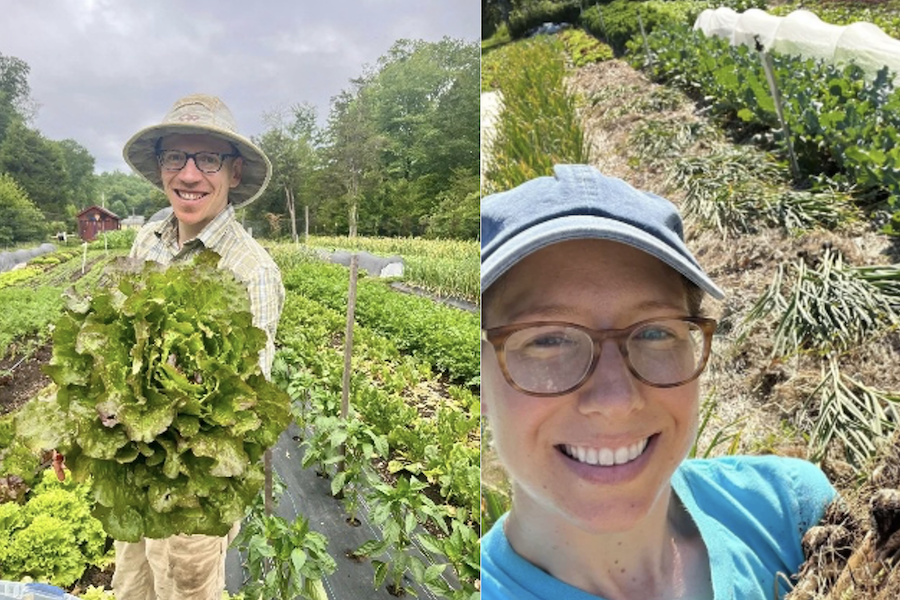
Introducing: Andrew and Christin from Deep Hollow Farm.
Andrew and Christine have produced certified organic fruits, vegetables, microgreens, and herbs at Deep Hollow Farm since 2023. Their wide variety of products offered include certified organic apples, asparagus, bok choy, broccoli, cabbage, carrots, chard, cucumber, eggplant, garlic, ginger, kale, kohlrabi, lettuce, onions, spinach, peppers, radishes, turnips, summer squash, winter squash, tomatoes, watermelon, Microgreens including brassica mix and pea, and herbs such as basil, cilantro, dill, mint, parsley.
You can find Deep Hollow Farm’s products at their farmstand in Chester, the Chester Sunday farmers’ market, purchase a year-long CSA membership, Foodworks Natural Market in Old Saybrook and Guilford, and in dishes served at restaurants including Grano Arso (Chester), River Tavern (Chester), Cooked Marketplace (Centerbrook), and Honeycone Craft Ice Cream (Chester).
While their farmstand is closed in the winter, the farm also operates an online store where customers can purchase fresh greens, root vegetables, and more winter-round.
When asked about why they pursued organic certification for their farm and products, Andrew and Christine replied that “We believe nourishing food comes from living, healthy soil. We use a no-till approach, which keeps the soil intact and limits erosion, while providing a stable environment for soil biology to thrive and support the growth of nutritious plants. Organic no-till farming aims to sustainably manage farmland, improve soil health, and promote environmental sustainability within agricultural systems.”
Introducing: James and Libby of Russo’s Roots.
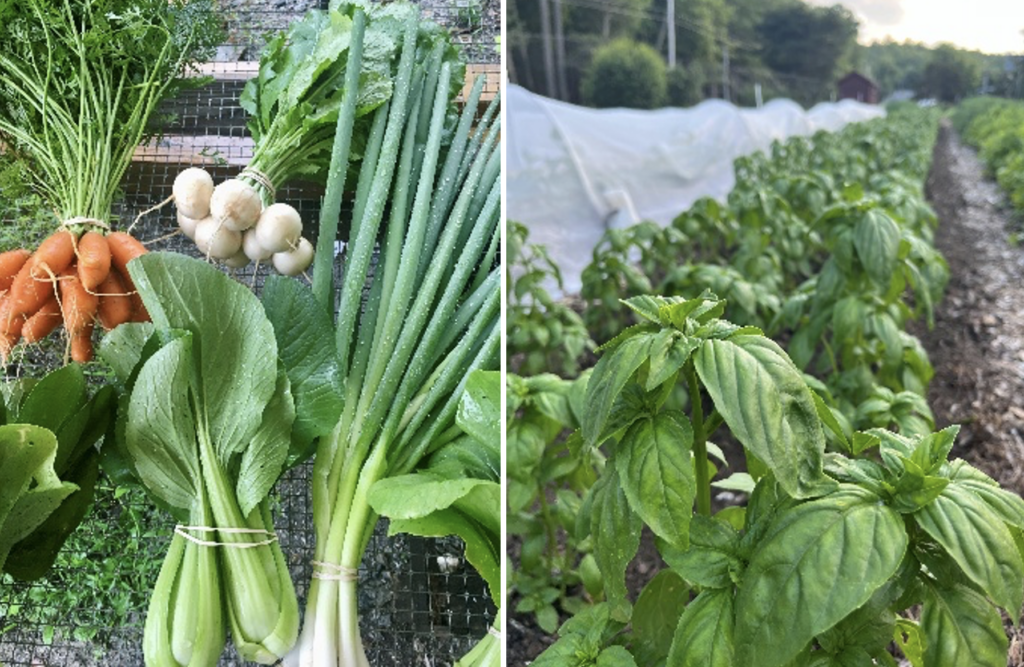
James and Libby purchased the farm that is now Russo’s Roots in 2014. The farm is nestled on 26 acres in the hills of eastern Connecticut. The farm’s roots date back to the 1930s when Finnish immigrants established a chicken farm. Since taking ownership of the property, James and Libby have slowly converted pastures into productive vegetable fields by transforming the soil into a diverse living system teeming with microorganisms that support healthy, nutritious vegetables.
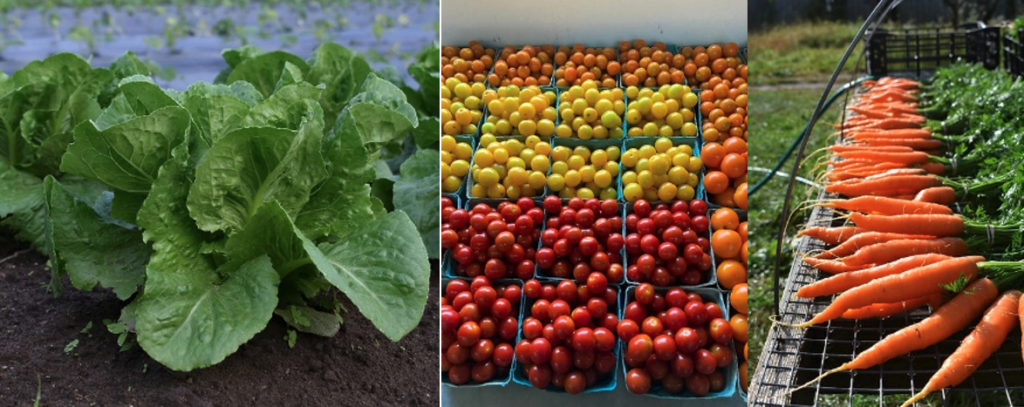
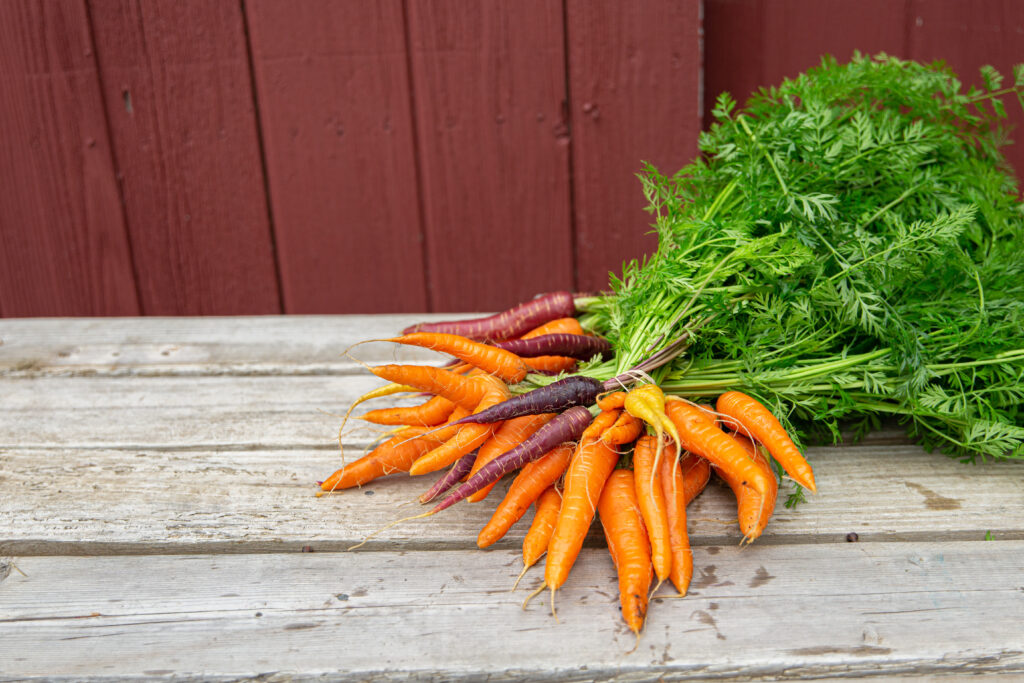
The farm produces a wide range of vegetables, including tomatoes, carrots, kohlrabi, puntarella, red napa cabbage, oriental eggplants, and shishito peppers. They also strive to push the envelope and grow things you wouldn’t normally find in our northern climate, such as ginger and turmeric. You can find Russo’s Roots products at their farmstand in Canterbury, the Willimantic farmers’ market, or purchase a Summer, Fall, or Winter community-supported agriculture (CSA) share.
When asked about why they pursued organic certification for their farm and products, James and Libby explained that “We have always been involved in organic farming even before there was a government certification system. As the lifeblood of the farm, we know that if we want healthy plants, we need to start with healthy soil. Through compost, cover crops, soil testing, organic fertilization, reduced tillage, and other techniques, we have nurtured a healthy and active soil environment for our plants.”
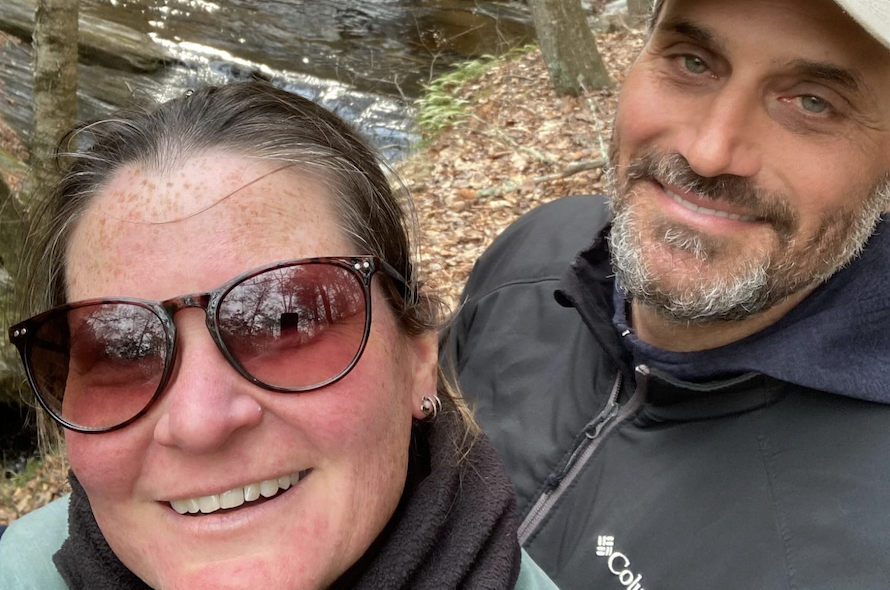
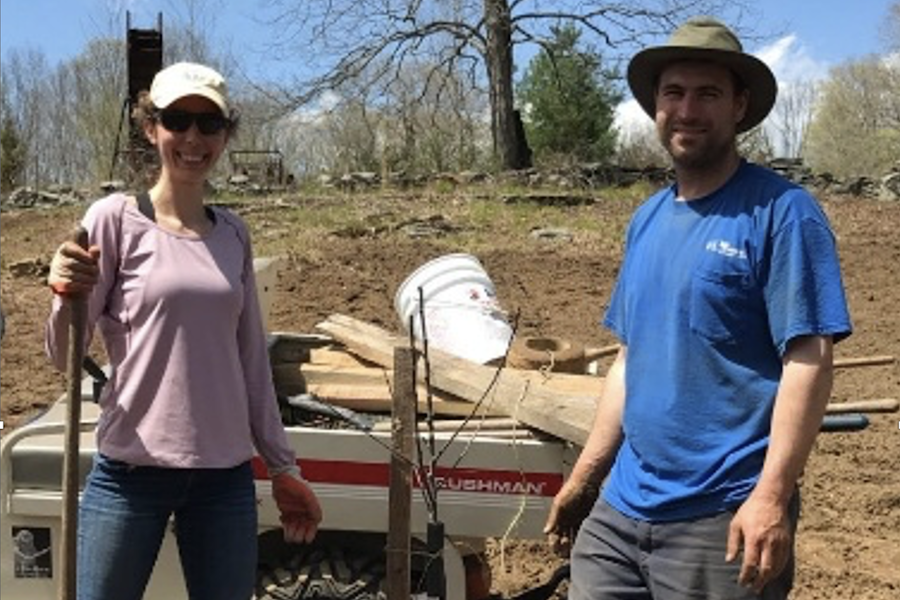
Introducing Mike and Michelle from Hilltop Farm.
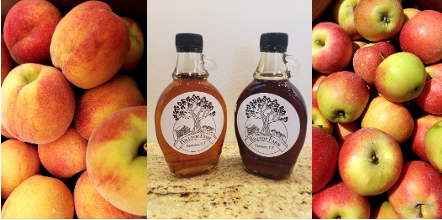
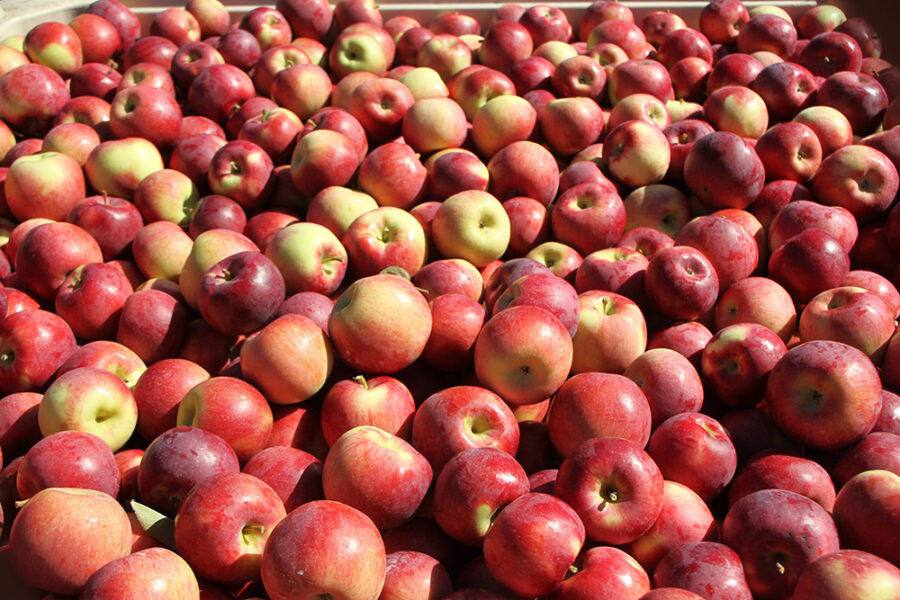
Mike and Michelle have owned and operated Hilltop Farm since February 2020. Their historical property and farmland were actively under agricultural production in the 1800s, and they are currently reviving the fields, sugar maples, and orchards. As of 2025, their orchard offers 26 apple varieties, 7 peach varieties, 5 pear varieties, 6 apricot varieties, and 2 mulberry trees.
They currently offer certified organic apples, apricots, American chestnuts, mulberries, paw paw, peaches, pears, maple sap, maple sugar, and maple syrup. You can find Hilltop Farm’s products at Shortts Farm’s farmstand, the Redding Grange farmers’ market, or call/email to place a pre-order and pickup at the farm in Redding.
When asked about why they pursued organic certification for their farm and products, Mike and Michelle noted that they wanted to “maintain a healthier ecosystem on their farm for the benefit of insects, animals, the fruit trees, themselves, and their customers.”
Introducing: Joanne Charon of Autumn Harvest Orchard
Like many farmers today, Joanne did not grow up on a farm. Instead, her love for farming originated from working in the family garden, and positive experiences visiting farms in her youth, which left her with a feeling that one day she would own an orchard.
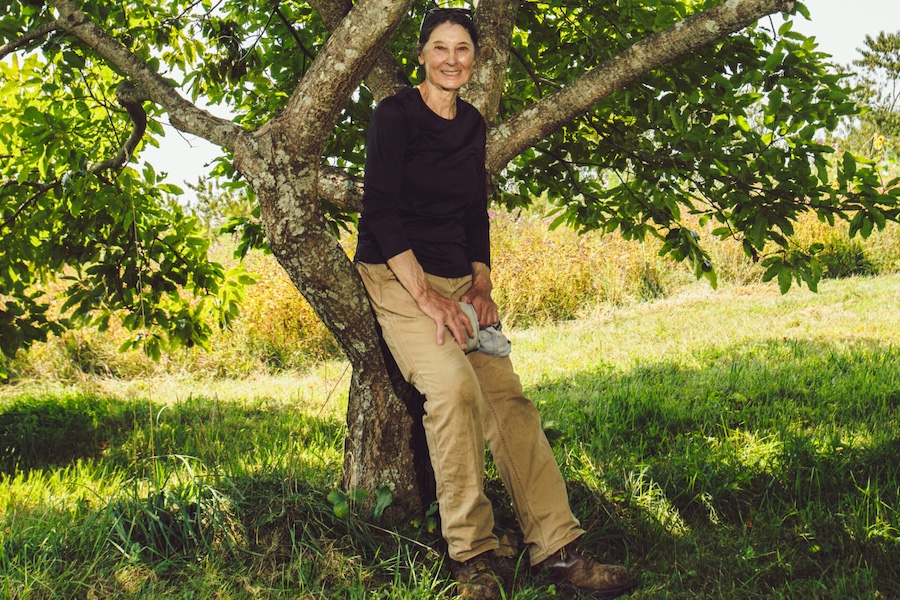
After graduating college, Joanne served for over 25 years in the military. Upon retirement, she cemented her future in agriculture and made her childhood visions a reality by purchasing the land that is now called Autumn Harvest Orchard in 2000. At the time, the land was an abandoned cow pasture, and it took many years of land and soil restoration to establish the diversified, productive orchard. Today, the orchard consists of over 400 apple, pear, chestnut, and nectarine trees, as well as over 300 blueberry bushes.
In addition to producing organic fruits and nuts, Autumn Harvest Orchard also harvests a wide variety of organic vegetables and honey from their apiary of 10-12 hives. The presence of beehives ensures their orchard and fields are well-pollinated, while also providing the honeybees with a wide variety of organic trees and plants to collect pollen and produce honey.
Enhancing the ecosystem of the land is one of Joanne’s priorities, and she says, “As farmers, we are committed to sustainable farming practices and to leave the land in a better state than what we found it in. Not only are we stewards of the land, we must work in harmony with nature and wildlife around us. This land continues to be cultivated and improved every year, and I am committed to finding natural practices to control pests and diseases, with the end goal of producing a great tasting and looking organic product.”

Introducing: Yoko Takemura and Alex Carpenter of Assawaga Farm in Putnam.
Originally from Japan, Yoko lived and worked in various countries until moving to New York City to pursue a master’s degree in environmental sustainability. While living in Brooklyn, New York, Yoko’s participation in a local community garden allowed her to discover the wonders of growing vegetables. Not long after, Yoko applied for apprenticeships on organic vegetable farms outside the city, and ended up training and gaining a wealth of knowledge and experience farming organically at Riverbank Farm in Roxbury, CT.
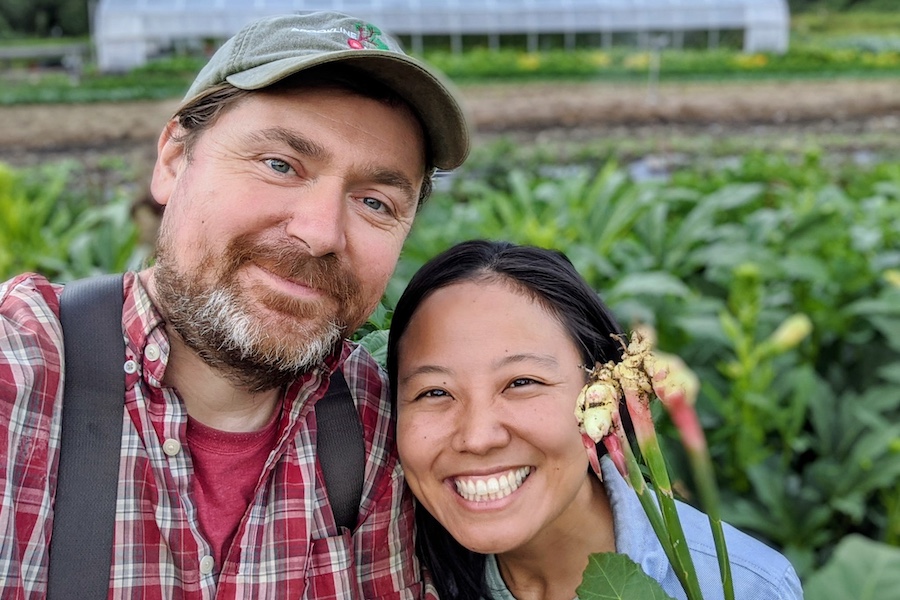
Alex Carpenter spent several years backpacking around the world before graduating with a degree in human ecology. During those travels, he became more aware and interested in agriculture and food systems. This interest soon transformed into a dream of growing clean, sustainable food.
In June of 2016, Yoko and Alex purchased raw land and founded Assawaga Farm. The word “assawaga”, meaning “place between” or “halfway place”, is the original Nipmuc name for the river now commonly known as the Five Mile River. Being embraced by the Assawaga River to the west and the Mary Brown Brook to the east, Assawaga Farm is quite literally the “place between”, with the confluence of the waterways promoting a wealth of fertility and biodiversity.
Today, Assawaga Farm is a certified organic farm growing vegetables, herbs, flowers, and fruits with an emphasis on Japanese varieties. For decades, the fields at Assawaga were used for hay, so there has been no application of chemicals for as far back as the history of their land can be traced.
Being certified organic means that Assawaga Farm uses natural processes and materials to grow its crops, promoting ecological balance and preserving biodiversity. Yoko and Alex state, “We’re committed above and beyond the guidelines for organic certification through practices such as minimizing the use of fossil fuels and plastic, avoidance of even organic pesticides, and installing perennial wildlife and pollinator habitats. We’re also always looking for ways to reduce our ecological footprint and encourage as much resource recycling as possible on the farm– for example, by making our own compost and sourcing additional materials such as leaves from within our community.
We believe in creating and maintaining fertility on our farm as much as possible through cover crops, compost, vermicompost, extracts, and natural mulches. We are stewards of the land, and as such, we strive to keep the land productive for many future generations to come.”
Come explore the delicious, locally produced food options available throughout Connecticut! Presenting the CT Grown Trail, uniting farm fresh food options, dining venues with locally sourced menu items, farmers’ markets, curated farm wine offerings, and more!
The CT Grown Trail provides suggestions for day trip itineraries allowing you to discover the diverse experiences available for finding locally sourced food. We invite you to review the itinerary for your region, and to continue exploring the fantastic opportunities for finding locally grown food in our state. Don’t forget to leave extra time for farm stands, locally produced ice cream, and other CT Grown attractions you may discover along the way!
Visit the CT Grown Trail to find more wonderful options and create your own journey. This blog offers suggestions for exploring the central region of Connecticut.
Morning
Breakfast
- Visit the Cafe at Clark Farms at Bushy Hill Orchard in Granby to enjoy breakfast favorites, such as their Apple Cinnamon Waffle made with their own apple cider, maple whipped cream, and fruit.
- Enjoy eggs, sausage, potatoes, and other goods sourced from Connecticut farms at BLDG in New Haven.
- Stop by Perk on Main in Middletown, which is committed to using local farms for its menu of crepes, breakfast sandwiches, and more.
Pick Your Own
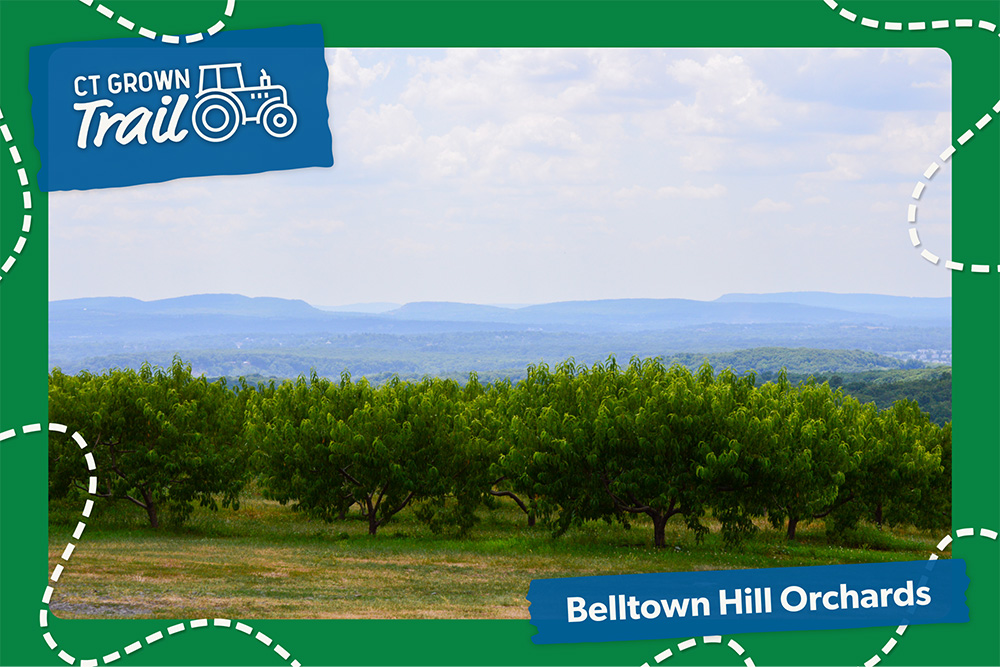
- Visit Belltown Hill Orchards in South Glastonbury to make a selection of seasonal fruits including plums, peaches, blueberries, apples, and more. Make a stop at their market for other local farm fresh products and freshly baked apple cider donuts.
Afternoon
Lunch
- Enjoy a meal at The Beamhouse in Glastonbury, which has a strong commitment to local ingredients. Find offerings from local farms, breweries, wineries, coffee roasters, and other producers.
- Get a table at Zinc in New Haven, which takes a “seed to plate” approach emphasizing the use of locally sourced ingredients for globally inspired meals.
- Visit Cafe Routier in Westbrook, whose menu items are inspired by the seasonal offerings of local farms and producers.
Farm Visit
- Explore a selection of fresh corn, eggplant, peppers, and other seasonal produce at Treat Farm in Orange.
- Stop by Clover Nook Farm in Bethany for meat products, as well as fresh seasonal vegetables, maple syrup, and honey.
- Head over to Deerfield Farm in Durham to find milk, yogurt, cheeses, and other dairy products.
Greenhouse
- Swing by Geremia Greenhouse in Wallingford and find some amazing plants and cut flowers at their retail stand. Their specialties include orchids, flowering annuals, and vegetable and herb varieties.
Winery Tour
- Visit Rosedale Farms & Vineyards in Simsbury to try out handcrafted wines. As a farm winery, you can also discover fresh fruits and vegetables as well as special chef-to-farm dinners.
- Make a stop at Gouveia Vineyards in Wallingford. It’s a dog-friendly venue, which makes it the perfect location to sit and stay for awhile. Pack your own picnic or purchase a charcuterie board in the tasting room to enjoy with your wine.
- Head to Chamard Vineyards, a French-inspired winery and bistro in Clinton, for local wines and lunch fare featuring ingredients from local farms.
Farmers’ Market
- Pay a visit to the West End Farmers Market (open Tuesdays from June through September from 4-7 pm) in Hartford and meet with vendors selling fresh vegetables, fruits, flowers, prepared foods, and more.
- Check out one of three farmers’ markets managed by CitySeed, an organization promoting a local food ecosystem and sustainable agriculture in the New Haven area. Each one is a producer-only market, meaning all the items for sale were grown on the vendor’s farm.
- Visit the Middletown Farmers Market to find fresh produce, flowers, and more from local farmers.
Evening
Dinner
- Grab dinner at Millwright’s Restaurant in Simsbury, which sources ingredients from several farms and producers around Connecticut. Guests can enjoy a local beer at the tavern or a view of the beautiful natural surroundings from the dining room.
- End your day with a meal at Arturo’s Restaurant in Branford, featuring Mexican fusion dishes made with locally sourced ingredients.
- Dine at River Tavern in Chester and find an ever-changing seasonal selection based on the latest items available from farmers and producers.
Come explore the delicious, locally produced food options available throughout Connecticut! Presenting the CT Grown Trail, uniting farm fresh food options, dining venues with locally sourced menu items, farmers’ markets, curated farm wine offerings, and more!
The CT Grown Trail provides suggestions for day trip itineraries allowing you to discover the diverse experiences available for finding locally sourced food. We invite you to review the itinerary for your region, and to continue exploring the fantastic opportunities for finding locally grown food in our state. Don’t forget to leave extra time for farm stands, locally produced ice cream, and other CT Grown attractions you may discover along the way!
Visit the CT Grown Trail to find more wonderful options and create your own journey. This blog offers suggestions for exploring the eastern region of Connecticut.
Morning
Breakfast
- Enjoy a hearty breakfast at The Farmer’s Cow Calfe & Creamery in Mansfield, featuring breakfast sandwiches with locally sourced eggs and meats as well as beverages featuring milk from Connecticut dairy farms.
- Stop in at The Vanilla Bean Cafe in Pomfret, featuring creative menu options made with ingredients sourced from local farms.
- Visit Somewhere in Time in Mystic, known for its filling fare featuring farm-fresh ingredients.
Visit a Farm
- Make a stop at Foster Hill Farm in Stafford Springs, where you will find over 170 varieties of tomato and pepper plants, plus herbs, perennials, vegetable plants, and miniature donkeys.
- Browse the general store at Our Kids Farm in Canterbury to find handmade, homemade, and locally sourced products including eggs, meat, milk, cheese, ice cream, jam, and maple syrup. When you are done shopping, go visit their Nigerian Dwarf goat herd and horses!
- Pay a visit to Sweet Grass Creamery in Preston to find dairy products like milk, yogurt, and cheese. Their farm market also features several products from other local farmers, such as jams, honey, and maple syrup.
Afternoon
Lunch
- Make a reservation at Monet’s Table Restaurant, located in an 18th century farmhouse, and experience local ingredients in salads, savory sandwiches, lunch entrees, and more.
- Visit Stone Row Kitchen + Bar in Willimantic, whose menu offerings are driven by the latest products available from local farms and seafood producers.
- Get a table at Oyster Club in Mystic, which specializes in local foods like fresh caught fish, dry aged meats, and CT Grown vegetables.
Vineyard Tour
- Visit Cassidy Hill Vineyard in Coventry to sample a wine flight, wine slushie, or a traditional glass of white or red. Enjoy live music on the lawn on Fridays between May and September.
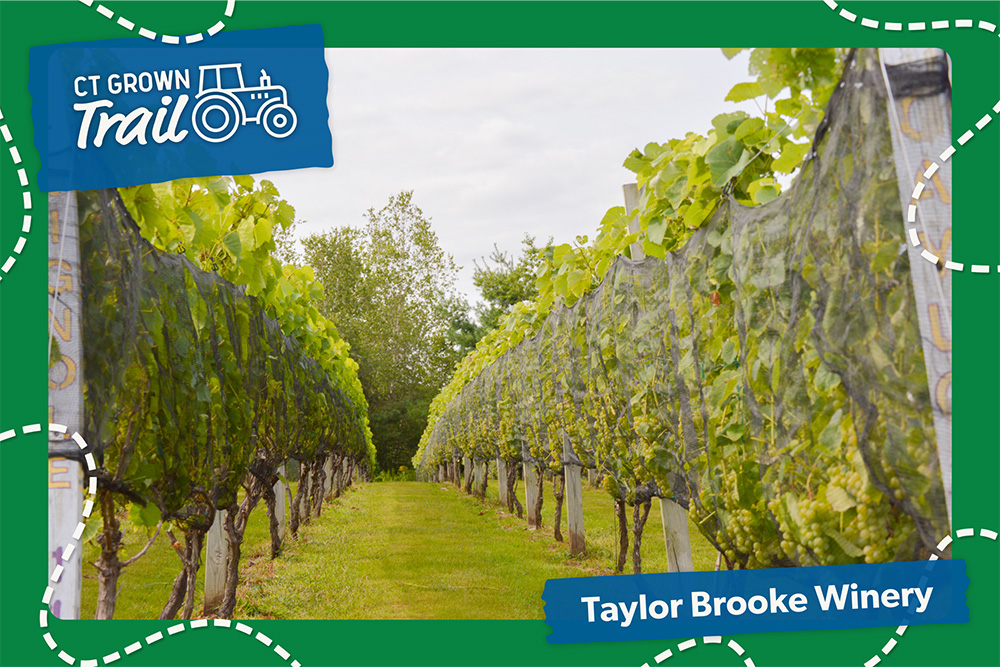
- Grab a beer or a glass of wine, tour the vineyard, and listen to live music at Taylor Brooke Winery and Brewery in Woodstock. Check their website for scheduled food trucks and special “meet the winemaker” events.
- Stop by Priam Vineyards in Colchester, a veteran-owned winery, to enjoy a delicious glass of wine as well as live music and other special events.
Visit an Oyster Farm
- Head to the shore to see Stonington Farms Shellfish, a small family oyster farm. Give them a call ahead of time and they’ll have a fresh order ready for you to pick up!
Farm Stand
- Stop by The Farm Stand at Lemek Farm in Tolland for fresh fruits and vegetables, salsa, sauces, goat’s milk soap, and other goods including hanging baskets with seasonal flowers.
Farmers’ Market
- Visit the Putnam Saturday Farmers Market (Saturdays from 10 a.m. to 1 p.m., June through October) to shop fresh produce and local goods.
Evening
Dinner
- Book a reservation at The Shipwright’s Daughter in Mystic, where executive chef David Standridge received the 2024 James Beard Award for Best Chef in the Northeast! This restaurant places value on sustainability, sourcing ingredients like kelp, fish, and vegetables from local farmers and producers.
- Dine at The Tavern at Spring Hill at Mansfield, part of an inn located in an 18th century building, for an extensive menu featuring local ingredients.
- Browse the menu at 85 Main in Putnam, which prides itself on menu items using freshly sourced seafood and produce from local farms.
Come explore the delicious, locally produced food options available throughout Connecticut! Presenting the CT Grown Trail, uniting farm fresh food options, dining venues with locally sourced menu items, farmers’ markets, curated farm wine offerings, and more!
The CT Grown Trail provides suggestions for day trip itineraries allowing you to discover the diverse experiences available for finding locally sourced food. We invite you to review the itinerary for your region, and to continue exploring the fantastic opportunities for finding locally grown food in our state. Don’t forget to leave extra time for farm stands, locally produced ice cream, and other CT Grown attractions you may discover along the way!
Visit the CT Grown Trail to find more wonderful options and create your own journey. This blog offers suggestions for exploring the western region of Connecticut.
Morning
Breakfast
- Have a farm-fresh breakfast at the Milk and Honey Grill in Goshen, known for its locally sourced products. Enjoy a delicious selection of breakfast sandwiches and other delicious fare to get ready for the day ahead.
- Enjoy a farm-to-table brunch at Terrain Garden Cafe in Westport, a greenhouse eatery featuring hand-picked local dishes.
Visit a Farm
- Visit March Farm in Bethlehem. Pick your own fresh fruits and berries, get a selection of produce at the farm stand, take the kids to enjoy a farm-themed playscape, and watch the goats clamber over a climbing course in their pondside yard.
- Stop by Laurel Ridge Farm in Litchfield to pick up some cuts of grass-fed beef and pastured pork products.
- Head to Sport Hill Farm in Easton to peruse its selection of fresh eggs, seasonal produce, and carefully curated local goods.
Farmers’ Market
- Start your day at the Danbury Farmers’ Market (Saturdays 10 a.m. to 2 p.m., June through October) for fresh produce, local goods, and health and nutrition programs.
Afternoon
Lunch
- Load up on picnic supplies at the Bantam Bread Company, which features artisan breads, rustic pastries, and a wide range of locally produced goods like butter, cheese, and honey.
- Have lunch at Bailey’s Backyard in Ridgefield, which is committed to finding fresh, high-quality meats, seafood, and produce from local producers.
Winery Tour
- Visit Hopkins Vineyard in Warren, head to the wine bar in the hayloft of a 19th century barn, and relax with a glass of the latest vintage as you gaze over nearby Lake Waramaug.
- Head to Jones Family Farms & Winery in Shelton and pick from a wide selection of wine options.
Evening
Dinner
- Make a reservation at The Community Table in New Preston. This restaurant is committed to using locally sourced ingredients and updating its menu regularly to feature in-season items. Stop in on Mondays for a special burger night!
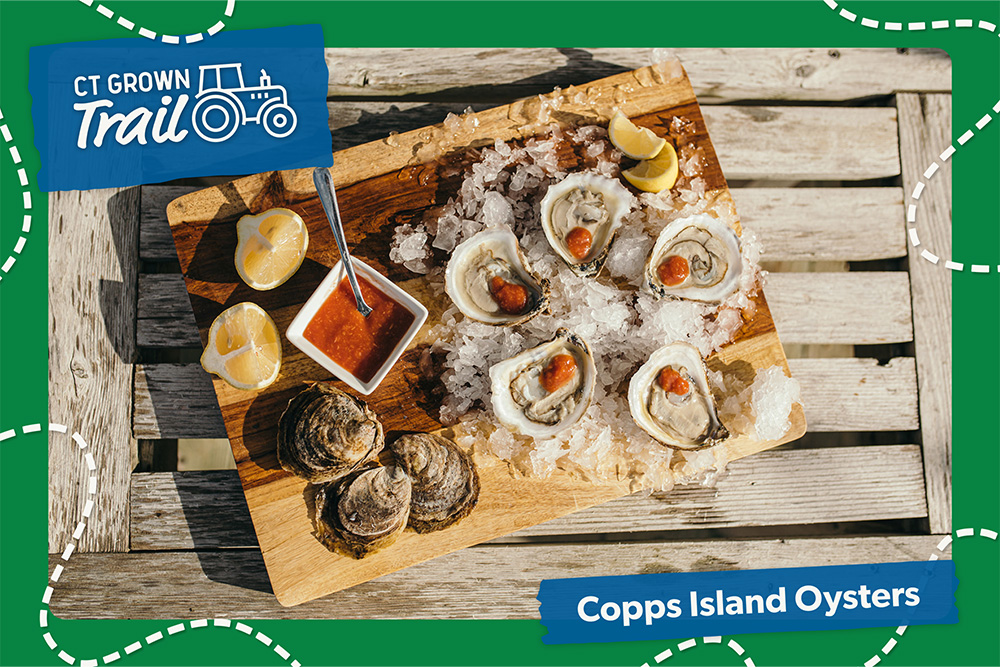
- Visit the Copps Island Oyster Shack, with locations in Stratford and Norwalk, to enjoy delicious oysters, clams, and other seafood straight from local boats.

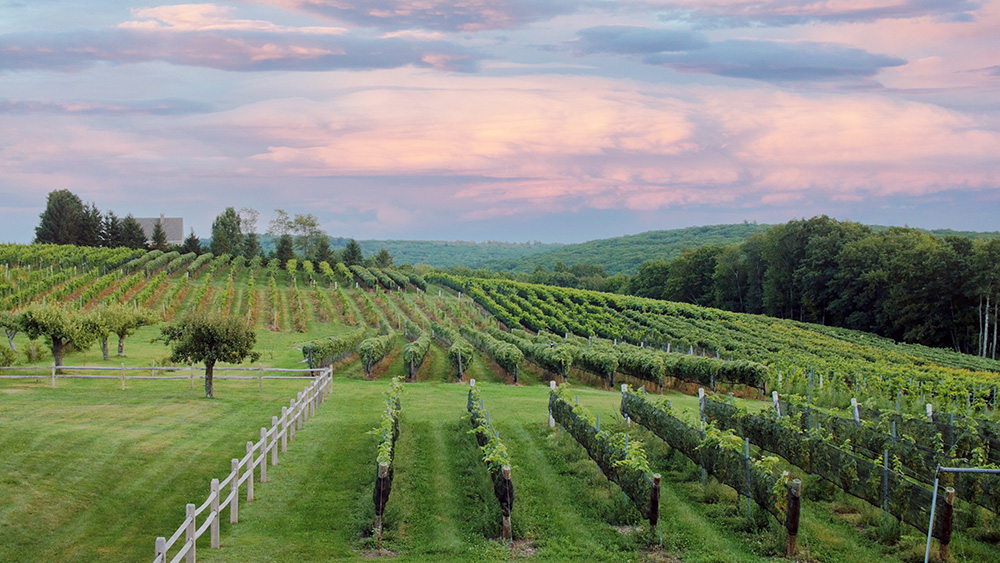
Interested in exploring more of Connecticut’s fantastic farm wineries? Participate in the 2024 Passport to Connecticut Wine Country program to create lasting memories and explore all that Connecticut has to offer!
The Passport will be available starting on May 4th, 2024. Participants can pick up a printed book at participating farm wineries, or download the digital app on the Apple App Store or Google Play. Both the printed book and app can be obtained free of charge.
The Passport program offers visitors the opportunity to engage with Connecticut’s award-winning farm wineries and be entered into prize drawings. At each stop, Passport holders can receive a physical or digital stamp, which counts as one point toward a reward level. Upon reaching a reward level, the Passport holder is entered into a drawing for that prize.
More than 100 prizes will be available, valued at a total of over $10,000. The three reward tiers are:
🍷 Taster (12 or more stamps)
🍷 Sommelier (18 or more stamps)
🍷 Winemaker (35 or more stamps)
Anyone who visits all 38 participating locations will be eligible for a commemorative gift recognizing their support of Connecticut’s farm wineries. Up to 50 names will be drawn at random for this prize.
Two locations are making their debut in the Passport program this year: Independence Vineyard in Lebanon and Tranquility Vineyard Winery in Middlebury.


The 2024 Passport program will conclude on December 31st, 2024. The prize drawing will be held no later than January 31st, 2025.
Only one entry is allowed per person. Stamps between printed books and the digital Passport cannot be combined.
The Passport is a program of the Connecticut Farm Wine Development Council, a voluntary council made up winery owners, research institutions, and representatives of Connecticut
Department of Agriculture and Connecticut Department of Economic and Community Development. The council, which is administered by the Connecticut Department of Agriculture, is responsible for promoting state wines and related products, offering educational programs, recommending research projects, and advising groups on farm wine development.