

Introducing: Andrew and Christin from Deep Hollow Farm.
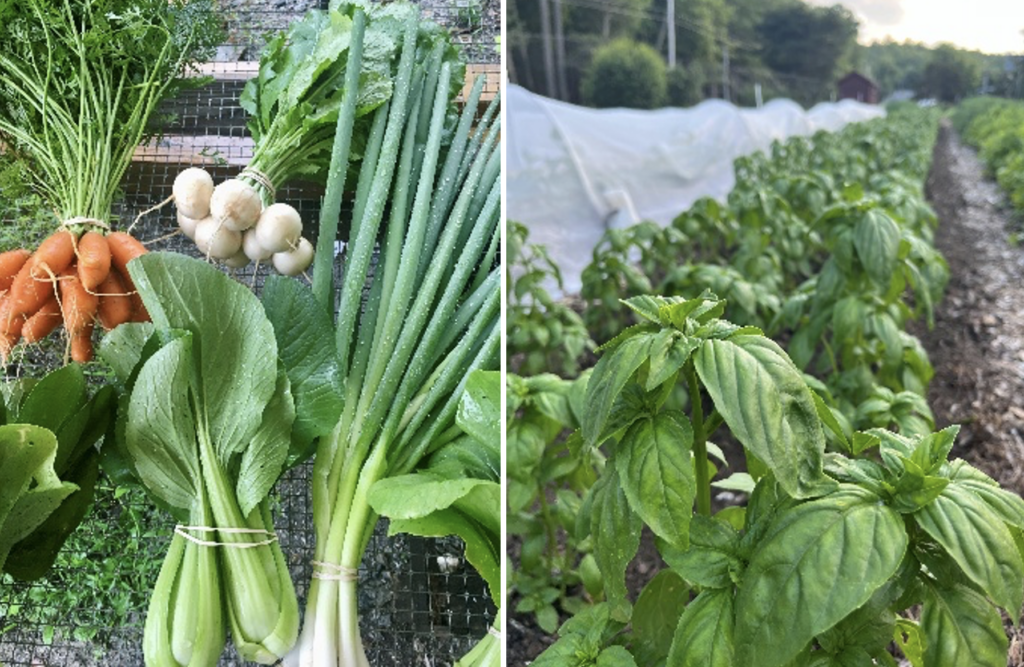
Andrew and Christine have produced certified organic fruits, vegetables, microgreens, and herbs at Deep Hollow Farm since 2023. Their wide variety of products offered include certified organic apples, asparagus, bok choy, broccoli, cabbage, carrots, chard, cucumber, eggplant, garlic, ginger, kale, kohlrabi, lettuce, onions, spinach, peppers, radishes, turnips, summer squash, winter squash, tomatoes, watermelon, Microgreens including brassica mix and pea, and herbs such as basil, cilantro, dill, mint, parsley.
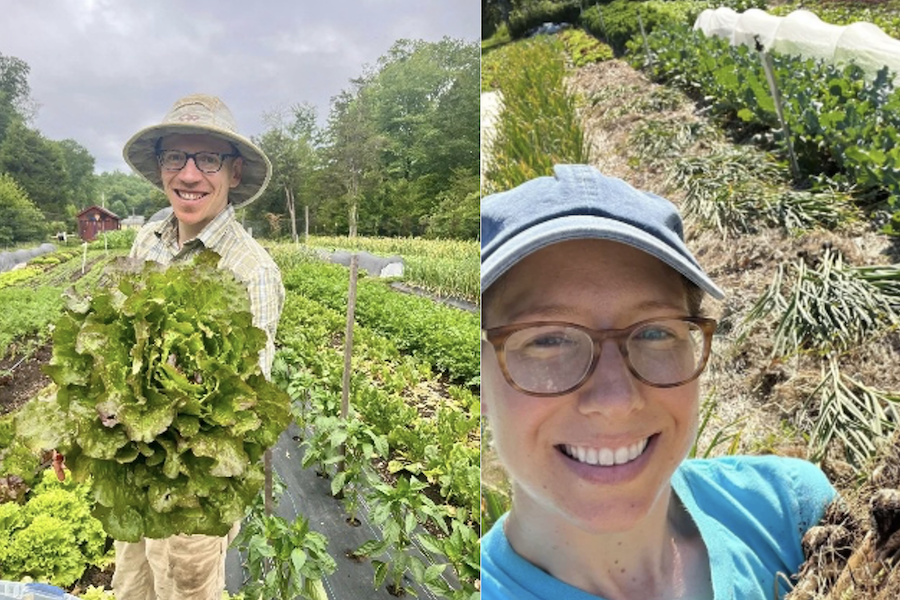
You can find Deep Hollow Farm’s products at their farmstand in Chester, the Chester Sunday farmers’ market, purchase a year-long CSA membership, Foodworks Natural Market in Old Saybrook and Guilford, and in dishes served at restaurants including Grano Arso (Chester), River Tavern (Chester), Cooked Marketplace (Centerbrook), and Honeycone Craft Ice Cream (Chester).
While their farmstand is closed in the winter, the farm also operates an online store where customers can purchase fresh greens, root vegetables, and more winter-round.
When asked about why they pursued organic certification for their farm and products, Andrew and Christine replied that “We believe nourishing food comes from living, healthy soil. We use a no-till approach, which keeps the soil intact and limits erosion, while providing a stable environment for soil biology to thrive and support the growth of nutritious plants. Organic no-till farming aims to sustainably manage farmland, improve soil health, and promote environmental sustainability within agricultural systems.”
Introducing: James and Libby of Russo’s Roots.
James and Libby purchased the farm that is now Russo’s Roots in 2014. The farm is nestled on 26 acres in the hills of eastern Connecticut. The farm’s roots date back to the 1930s when Finnish immigrants established a chicken farm. Since taking ownership of the property, James and Libby have slowly converted pastures into productive vegetable fields by transforming the soil into a diverse living system teeming with microorganisms that support healthy, nutritious vegetables.
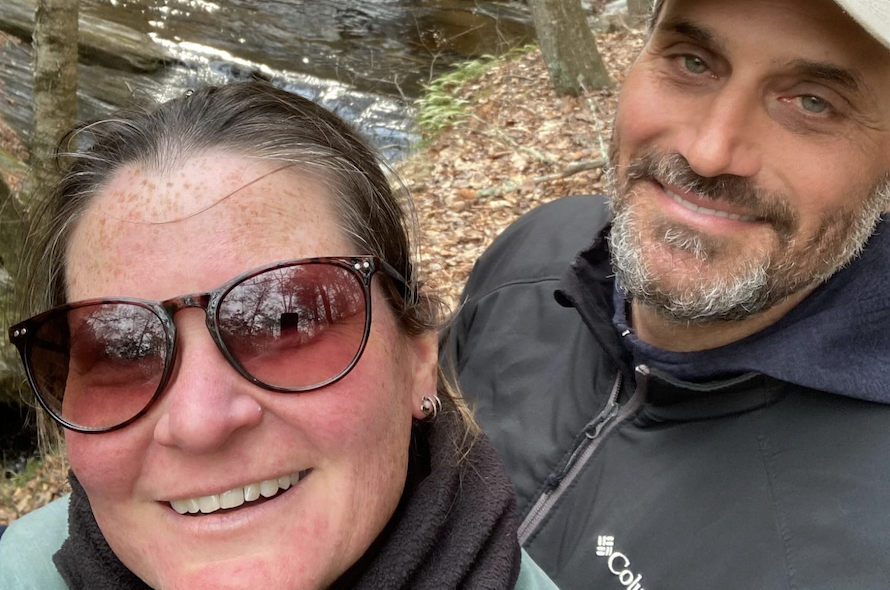
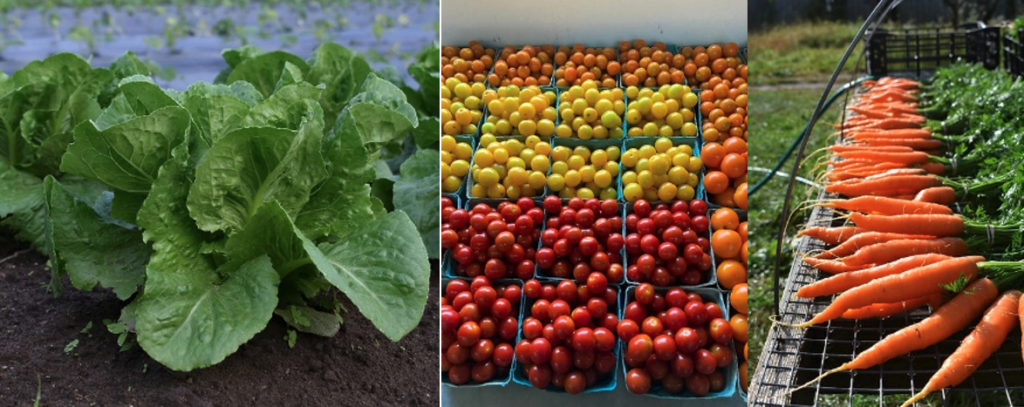
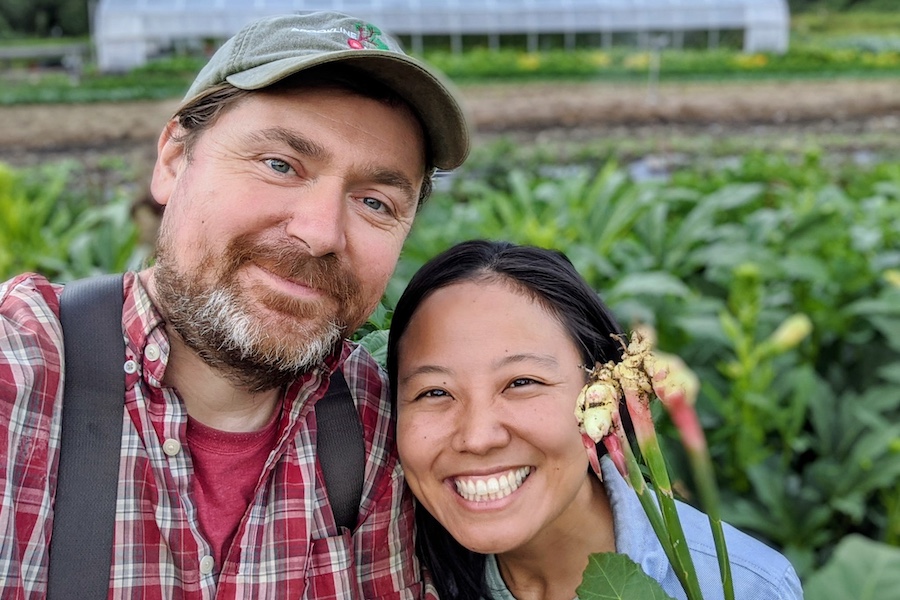
The farm produces a wide range of vegetables, including tomatoes, carrots, kohlrabi, puntarella, red napa cabbage, oriental eggplants, and shishito peppers. They also strive to push the envelope and grow things you wouldn’t normally find in our northern climate, such as ginger and turmeric. You can find Russo’s Roots products at their farmstand in Canterbury, the Willimantic farmers’ market, or purchase a Summer, Fall, or Winter community-supported agriculture (CSA) share.
When asked about why they pursued organic certification for their farm and products, James and Libby explained that “We have always been involved in organic farming even before there was a government certification system. As the lifeblood of the farm, we know that if we want healthy plants, we need to start with healthy soil. Through compost, cover crops, soil testing, organic fertilization, reduced tillage, and other techniques, we have nurtured a healthy and active soil environment for our plants.”
Introducing Mike and Michelle from Hilltop Farm.
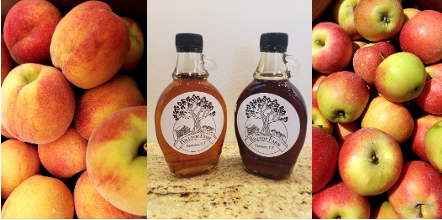
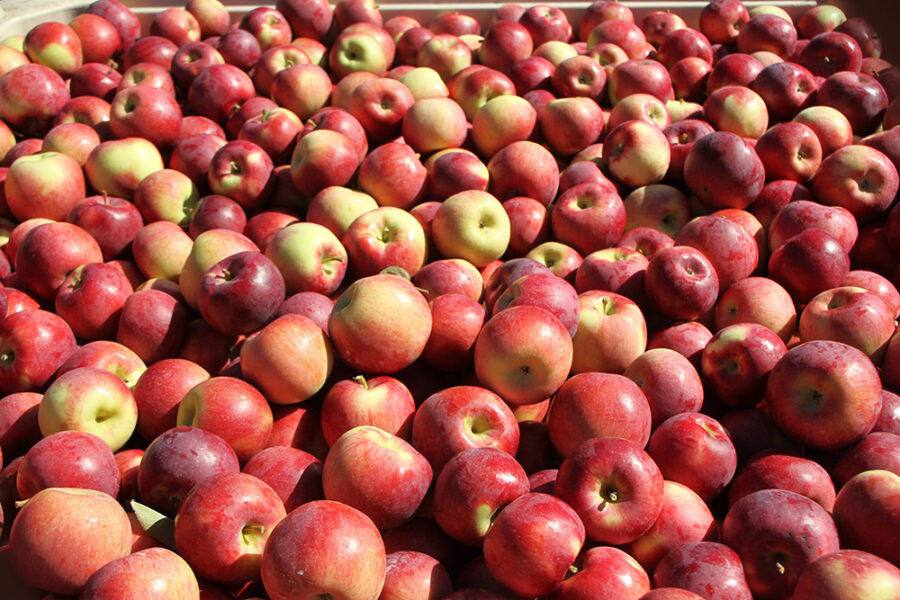
Mike and Michelle have owned and operated Hilltop Farm since February 2020. Their historical property and farmland were actively under agricultural production in the 1800s, and they are currently reviving the fields, sugar maples, and orchards. As of 2025, their orchard offers 26 apple varieties, 7 peach varieties, 5 pear varieties, 6 apricot varieties, and 2 mulberry trees.
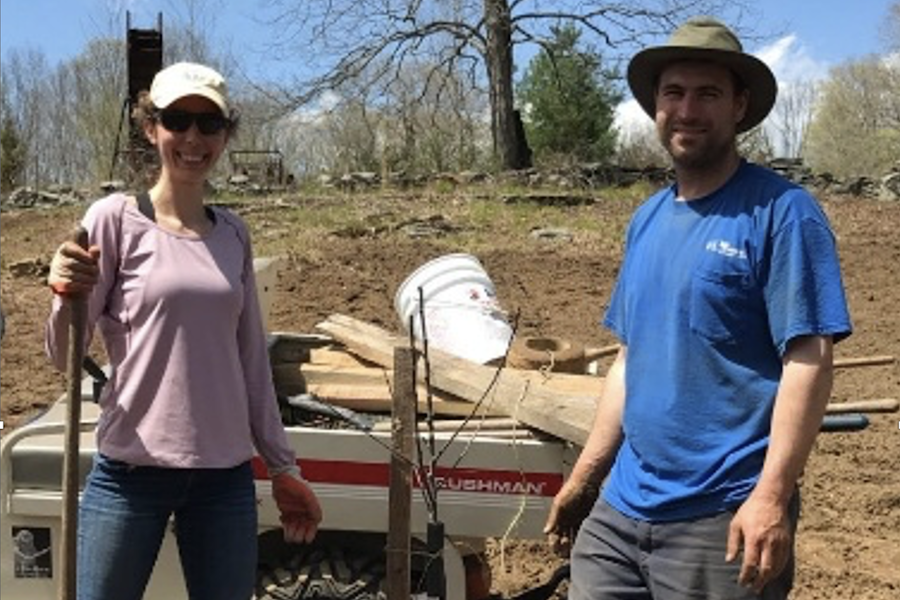
They currently offer certified organic apples, apricots, American chestnuts, mulberries, paw paw, peaches, pears, maple sap, maple sugar, and maple syrup. You can find Hilltop Farm’s products at Shortts Farm’s farmstand, the Redding Grange farmers’ market, or call/email to place a pre-order and pickup at the farm in Redding.
When asked about why they pursued organic certification for their farm and products, Mike and Michelle noted that they wanted to “maintain a healthier ecosystem on their farm for the benefit of insects, animals, the fruit trees, themselves, and their customers.”
Introducing: Joanne Charon of Autumn Harvest Orchard
Like many farmers today, Joanne did not grow up on a farm. Instead, her love for farming originated from working in the family garden, and positive experiences visiting farms in her youth, which left her with a feeling that one day she would own an orchard.
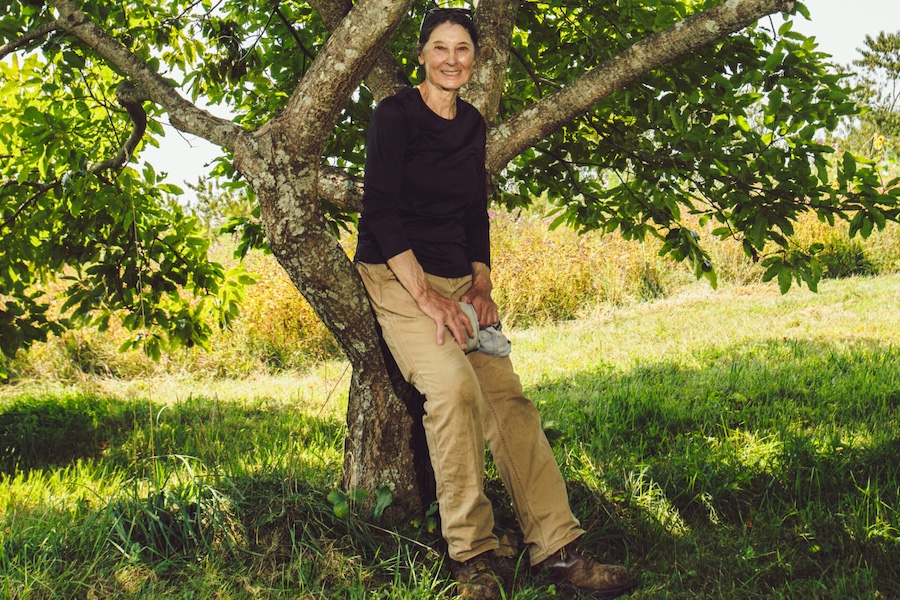
After graduating college, Joanne served for over 25 years in the military. Upon retirement, she cemented her future in agriculture and made her childhood visions a reality by purchasing the land that is now called Autumn Harvest Orchard in 2000. At the time, the land was an abandoned cow pasture, and it took many years of land and soil restoration to establish the diversified, productive orchard. Today, the orchard consists of over 400 apple, pear, chestnut, and nectarine trees, as well as over 300 blueberry bushes.
In addition to producing organic fruits and nuts, Autumn Harvest Orchard also harvests a wide variety of organic vegetables and honey from their apiary of 10-12 hives. The presence of beehives ensures their orchard and fields are well-pollinated, while also providing the honeybees with a wide variety of organic trees and plants to collect pollen and produce honey.
Enhancing the ecosystem of the land is one of Joanne’s priorities, and she says, “As farmers, we are committed to sustainable farming practices and to leave the land in a better state than what we found it in. Not only are we stewards of the land, we must work in harmony with nature and wildlife around us. This land continues to be cultivated and improved every year, and I am committed to finding natural practices to control pests and diseases, with the end goal of producing a great tasting and looking organic product.”

Introducing: Yoko Takemura and Alex Carpenter of Assawaga Farm in Putnam.
Originally from Japan, Yoko lived and worked in various countries until moving to New York City to pursue a master’s degree in environmental sustainability. While living in Brooklyn, New York, Yoko’s participation in a local community garden allowed her to discover the wonders of growing vegetables. Not long after, Yoko applied for apprenticeships on organic vegetable farms outside the city, and ended up training and gaining a wealth of knowledge and experience farming organically at Riverbank Farm in Roxbury, CT.
Alex Carpenter spent several years backpacking around the world before graduating with a degree in human ecology. During those travels, he became more aware and interested in agriculture and food systems. This interest soon transformed into a dream of growing clean, sustainable food.
In June of 2016, Yoko and Alex purchased raw land and founded Assawaga Farm. The word “assawaga”, meaning “place between” or “halfway place”, is the original Nipmuc name for the river now commonly known as the Five Mile River. Being embraced by the Assawaga River to the west and the Mary Brown Brook to the east, Assawaga Farm is quite literally the “place between”, with the confluence of the waterways promoting a wealth of fertility and biodiversity.
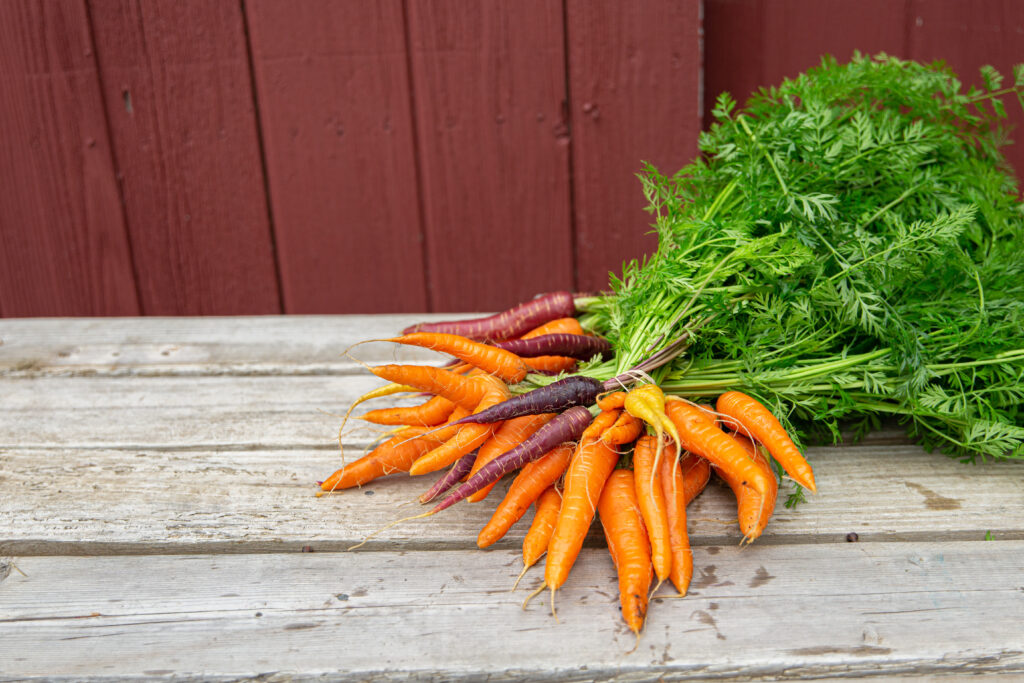
Today, Assawaga Farm is a certified organic farm growing vegetables, herbs, flowers, and fruits with an emphasis on Japanese varieties. For decades, the fields at Assawaga were used for hay, so there has been no application of chemicals for as far back as the history of their land can be traced.
Being certified organic means that Assawaga Farm uses natural processes and materials to grow its crops, promoting ecological balance and preserving biodiversity. Yoko and Alex state, “We’re committed above and beyond the guidelines for organic certification through practices such as minimizing the use of fossil fuels and plastic, avoidance of even organic pesticides, and installing perennial wildlife and pollinator habitats. We’re also always looking for ways to reduce our ecological footprint and encourage as much resource recycling as possible on the farm– for example, by making our own compost and sourcing additional materials such as leaves from within our community.
We believe in creating and maintaining fertility on our farm as much as possible through cover crops, compost, vermicompost, extracts, and natural mulches. We are stewards of the land, and as such, we strive to keep the land productive for many future generations to come.”